Coins vs Bars: How to Compare Them Fairly, and What the Law and the IRS Say
Some links may be affiliate links. If you buy through them, we may earn a commission at no extra cost to you.
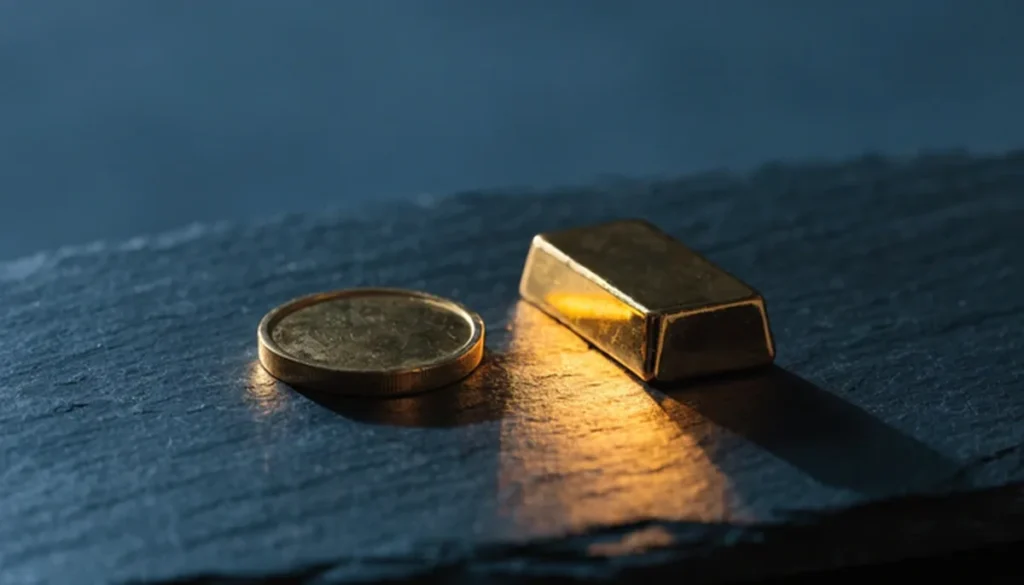
Congress wrote the weight of the American one-ounce gold coin into law: the $50 gold coin weighs 33.931 grams and contains exactly one troy ounce of fine gold. The extra weight is alloy.
A bar works differently because its weight and purity are stamped on it by whoever made it. That difference, and not a rumor about which form is cheaper, is where the choice between coins and bars starts.
This article does not tell you whether coins or bars cost less per ounce, because no regulator or government source we read compares them. What it does give is a fair way to compare any two quotes, what the law and the IRS say about each form, and the practical points on shipping and verification where the two forms really do differ.
Compare by the Ounce, in Writing
The CFTC and FINRA bulletin on buying physical metals gives the method. Spot price is quoted in dollars per troy ounce. Multiply the metal weight by the spot price to find the raw metal value, then compare that with the dealer’s price.
The bulletin’s own example is a half-ounce gold coin at a time when spot was $2,000: the coin is worth $1,000 plus the dealer’s markup, called the premium. When you compare coins and bars, the bulletin says to compare the actual weight and the price, not the sticker size or the name.
Weight is where mistakes happen. A bar sold in grams has to be converted before it can be compared with a coin sold in ounces. NIST gives the factor as roughly 31.1 grams to the troy ounce, and the silver dollar statute uses 31.103 grams.
A gram bar labeled with a round number of grams does not correspond to a round number of ounces.
Three more steps come from the same bulletin. Every dealer sells above spot and buys back below it, and each dealer sets its own spread, so it pays to shop around. Ask for all fees, costs, commissions, and the price in writing before you sign.
And ask what you would receive if you had to sell the metal back tomorrow. The retail dealers themselves are not regulated at the federal level, which puts the burden of checking on you.
What a Coin Is in Law
Title 31 of the U.S. Code sets the specifications of the U.S. Mint’s bullion coins. The $50 gold coin holds one troy ounce of fine gold. The $25 coin holds a half ounce. The silver dollar of the same law weighs 31.103 grams and is .999 fine.
For silver, the Mint must sell the coin at a price equal to the bullion’s market value at the time of sale, plus the costs of minting, marketing, and distribution.
For gold, the price may not be less than the market value plus those costs. That statute covers only the Mint’s own coins, which leaves open what a dealer charges on top.
The CFTC bulletin distinguishes between bullion and numismatic. Bullion coins and ingots share a common investment-grade purity and weight.
A numismatic coin is rare or collectible, and a semi-numismatic coin is sold as collectible but typically carries no additional value because it is not rare.
The bulletin notes that semi-numismatic coins are likely less liquid than bullion, so check the buyback price before paying a collectible premium.
What a Bar Is and How It Gets Checked
The wholesale bar is large. The London Bullion Market Association describes its Good Delivery bars as about 400 troy ounces of gold and 1,000 troy ounces of silver, and says kilobars, 100-ounce bars, and smaller bars are not acceptable in the London wholesale market.
A gold futures contract on COMEX delivers either one 100-ounce bar or three one-kilogram bars and requires a minimum fineness of 995.
The bars sold to individuals are mostly smaller than those, but no source we read gives typical retail sizes, so this article does not either.
Verification is where bars need the most care. The LBMA says the only way to accurately determine the fineness of a gold bar is to take a representative sample, that X-ray testing can be fooled by simple plating, and that there does not appear to be a definitive non-destructive testing solution.
For a buyer, this means the maker’s name, a sealed package when offered, and the seller’s reputation carry weight, just as a coin’s design and weight do, and it is one more reason to buy from a seller you can check.
Taxes and Reports: Treat Them Alike, Mostly
For tax purposes, the IRS treats gold and silver bullion and coins as the same. Publication 550 lists metals such as gold, silver, and platinum bullion, and coins, as collectibles when held for more than a year, and Topic 409 states that net capital gains from collectibles are taxed at a maximum rate of 28 percent.
The IRS does not distinguish between a coin and a bar on those pages.
Reporting follows separate rules. On Form 1099-B, a dealer’s sale of metal is reportable only if the CFTC has approved that form for a regulated futures contract and the quantity meets the contract minimum, with sales to a single customer in a 24-hour period aggregated.
The instructions use a single gold coin as an example of a sale that needs no form, and the example refers to a minimum of 25 coins. We could not confirm the current minimums for bars or for silver, so we do not state them.
Cash is another rule: a business that receives more than $10,000 in currency in a single transaction or related transactions must report it within 15 days, and the rule treats collectible sales as covered.
IRAs Look at the Item
An IRA that buys a collectible is treated as taking a distribution, and the amount invested counts as distributed in that year. The tax code carves out certain items. U.S. gold coins of the kinds listed in Title 31 and the one-ounce silver coin are not collectibles, nor are coins issued under state law.
Bullion also qualifies if it meets the minimum fineness required by a futures market and is physically held by a trustee. So eligibility turns on the specific coin or bar and on who holds it, not on whether it is a coin or a bar. A custodian can confirm a specific product.
Shipping Limits Apply to Both
USPS says Registered Mail is its most secure service and insures up to $50,000. FedEx limits declared value to $1,000 for precious metals, including gold and silver bullion, and for collector coins. UPS does not accept coins or articles that are more than half gold or platinum by weight.
Read the current terms before you ship, and get insurance in writing.
One warning from the FBI is worth repeating. Its January 2024 alert describes scams in which criminals send couriers to collect cash or precious metals from victims, reports losses over $55 million in the final eight months of 2023, and says the U.S. government and legitimate businesses will never ask you to buy gold. No coin or bar is an answer to a stranger on the phone.
Common Questions
Are bars cheaper than coins?
No source we read says so. Compare the price per ounce, including the buyback price, for the exact items you are considering.
Which is easier to sell?
The bulletin says semi-numismatic coins are likely less liquid than bullion. Beyond that, no source compares coin buyback with bar buyback, so ask each dealer what it would pay.
Can I put either in an IRA?
Certain coins and bullion that meet the fineness test can be held if a trustee has physical possession. The item matters more than its shape.
Is the tax different?
The IRS pages we read treat gold and silver coins and bullion alike as collectibles, subject to a 28 percent maximum rate on long-term gains.
A Rule for Choosing
Pick the item you can price per ounce, verify it and sell it back on known terms, and write down the premium, the fees, and the buyback number before you pay.