
Silver Rounds and Bars: What Is the Difference, and Does It Matter?
Some links may be affiliate links. If you buy through them, we may earn a commission at no extra cost to you.
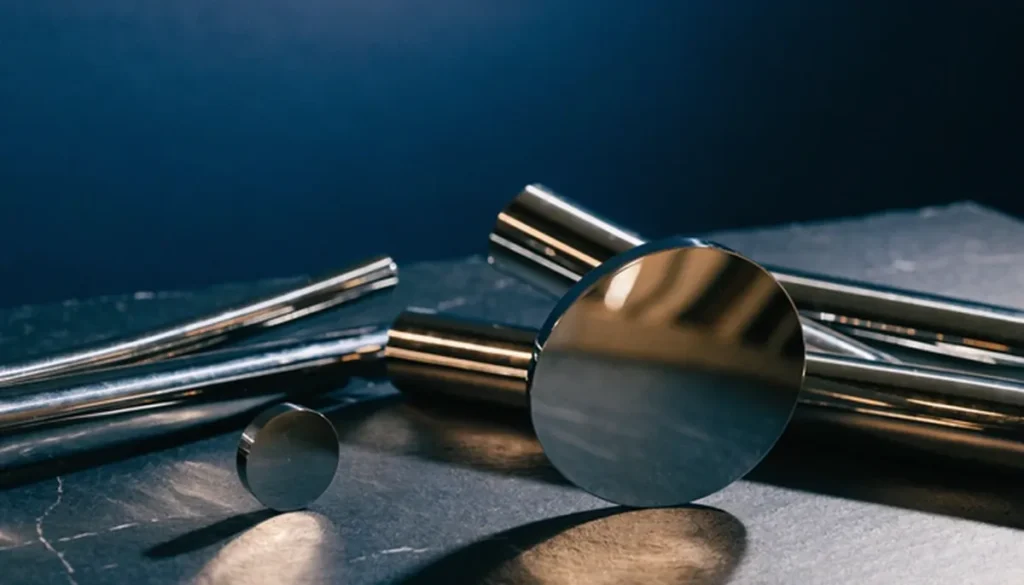
The silver contract on the COMEX exchange delivers “Five (5) bars of refined silver cast in bars of one thousand (1,000) troy ounces.” The London Bullion Market Association sets the same size for a Good Delivery silver bar: “1000 troy ounces (approx. 32 kilograms) with a +/- 10% tolerance.”
The one-ounce silver round and the 10-ounce bar on a retail shelf are not that product, and they do not follow any federal specification at all.
This article sorts out the vocabulary: what a round is and is not, how it differs from a coin and from the exchange bar, and what the law says about copies. It also covers sales tax, the IRA rule and the price checks the regulators recommend. Where a question has no answer in a primary source, the article says so.
A Round Is Not a Coin
Federal law defines the U.S. coins that are money. Title 31 says the coins issued under it “shall be legal tender as provided in section 5103 of this title,” and section 5103 says they “are legal tender for all debts, public charges, taxes, and dues.”
The one-ounce U.S. silver coin is specified in section 5112: the coins “are 40.6 millimeters in diameter and weigh 31.103 grams” and “contain .999 fine silver,” with inscriptions that include a face value. A private mint’s round has no such statute behind it. No law cited in this article says, in so many words, that a round is not legal tender.
The conclusion follows from reading the sections, which define the U.S. coins and never mention rounds, so treat it as our reading and not a quotation.
The same chapter says “Foreign gold or silver coins are not legal tender for debts.” A round does not need legal tender status to hold silver, and many buyers want the metal and nothing else.
The difference still matters when you compare prices. The Treasury sells its coins “at a price equal to the market value of the bullion at the time of sale, plus the cost of minting, marketing, and distributing.” A private mint can price a round however it likes, and so can a dealer. Compare the price per ounce of silver, not the shape.
When a Round Copies a Coin
Some rounds imitate historic coin designs, and the Hobby Protection Act covers that area. It makes it unlawful to sell “any imitation numismatic item which is not plainly and permanently marked,” and it defines an imitation as “a reproduction, copy, or counterfeit of an original numismatic item.”
An original numismatic item is one that “has been used in exchange or has been used to commemorate a person or event.” The Federal Trade Commission “shall prescribe rules for determining the manner and form” of the marking. Under the Act, the required marking word is “copy.”
Whether a given round counts as an imitation numismatic item is a question none of the sources read here answers. If a round looks like an old coin, ask the seller how it is marked and read the marking before you buy. A copy marked as one is lawful. An unmarked one is the problem.
The Exchange Bar and the Small Bar
| COMEX silver contract (2021 filing) | LBMA Good Delivery silver bar | |
|---|---|---|
| Weight | Bars of 1,000 troy ounces, five per contract | 1000 troy ounces with a 10% tolerance |
| Minimum fineness | 999 | 999.0 parts per thousand |
| Tolerance | 10 percent either higher or lower | Plus or minus 10 percent |
| Marks | Weight, fineness, bar number, brand mark | Refiner stamp, fineness, serial number, date |
COMEX says its silver “shall assay to a minimum of 999 fineness and must be a brand approved by the Exchange,” and each bar must have its markings “clearly incised on the bar.” The LBMA’s rule is that “the minimum acceptable fineness is 999.0 parts per thousand silver,” and it keeps older 750- to 1100-ounce bars acceptable.
The COMEX figures come from a 2021 filing that shows its edits, and the exchange may have changed its rules since, so confirm against the current rulebook before relying on a number. Smaller bars from retail shelves do not appear in either specification.
Comparing Prices
The CFTC and FINRA bulletin gives the rules for any silver purchase. “A dealer will always sell metal above the spot price and buy it back below the spot price.” “Some fraudulent dealers have charged spreads of more than 300 percent while other dealers may charge less than 20 percent,” and the bulletin notes that “Semi-numismatic” is “a made-up industry term that really has no special meaning.”
It adds that such items are “likely less liquid–harder to sell–than bullion.” The bulletin defines bullion plainly: “Bullion coins or ingots share a common investment-grade purity and weight.”
No source cited in this article compares round premiums with coin or bar premiums, so it does not say which costs less. A worked example with invented numbers shows how to find out for yourself. Suppose spot silver is $30 an ounce.
A dealer offers one ten-ounce bar for $335 and ten one-ounce rounds at $36 each, for a total of $360. The bar costs $35 above its $300 of silver, or $3.50 an ounce. The rounds cost $60 above it, or $6 an ounce.
Next, ask each for the buyback price, as it indicates what the metal returns. Then compare the gap between what you pay and what you could sell for.
Sales Tax Depends on Where You Live
Two states show how much the rules vary. Minnesota’s statute exempts “bars or rounds that consist of 99.9 percent or more by weight” of silver, gold, platinum or palladium, if they “are marked with weight, purity, and content.” Indiana’s Department of Revenue bulletin says “transactions involving the sale of bullion, which may be available in the form of coins, bars, or rounds, are subject to tax,” and it carves out silver at 999 parts per 1,000.
Those are the only two states checked in this article, and a third state may have the opposite effect. Read your own state revenue department’s page before assuming a rule.
Paperwork and IRAs
The IRS Form 1099-B instructions tie a dealer’s reporting to futures contracts. A sale “in any form for which the Commodity Futures Trading Commission (CFTC) has not approved trading by regulated futures contract” is not reportable, and a sale below “the minimum required quantity” of an approved contract is not either.
Sales to one customer in 24 hours “must be aggregated and treated as a single sale.” The regulation behind the form contains no silver numbers, and the instructions give none, so no figure for bars or rounds is printed here. COMEX uses 1,000-ounce bars, but the IRS does not say that fact decides reporting, so ask the dealer.
The IRA rule works the same way. The tax code treats “any metal” and “any stamp or coin” as collectibles, with an exception for silver “bullion of a fineness equal to or exceeding the minimum fineness” that a futures contract requires, if a trustee holds it. The statute uses the term “bullion” and does not define “bars” or “rounds,” so it does not settle whether a private round qualifies.
IRS Publication 590-A names “one-ounce silver coins minted by the Treasury Department” and “certain” bullion. Ask your custodian in writing before buying, and keep the metal in the trustee’s custody.
Common Questions
Is a silver round legal tender?
Congress defined which coins are legal tender, and rounds are not among them. No statute states that outright, so this is a reading of the law.
Can a round coin design be copied?
The Hobby Protection Act requires an imitation numismatic item to be plainly and permanently marked “copy.” Whether a particular round is an imitation under the Act is not answered by these sources.
Does my 10-ounce bar match the exchange standard?
No. COMEX and the LBMA both specify bars of about 1,000 ounces at 999 fineness or better, and small retail bars are outside both standards.
Will I pay sales tax?
It depends on the state. Minnesota exempts marked bars and rounds of 99.9 percent purity, and Indiana taxes bullion with a carve-out for silver at 999 parts per 1,000. Check your own state.
A Rule Before You Buy
Compare every offer as dollars above spot per ounce, ask for the buyback and the marking in writing, and check your state’s tax rule before you count the savings.