
Silver Coins: Legal Tender, Purity and What to Check Before You Buy
Some links may be affiliate links. If you buy through them, we may earn a commission at no extra cost to you.
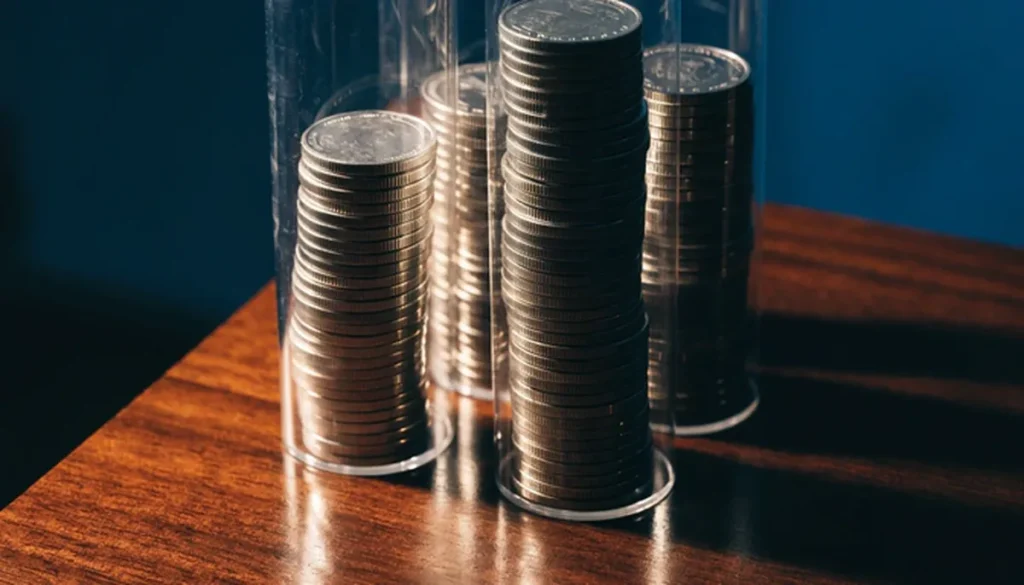
The statute that defines the one-ounce U.S. silver coin gives its size and purity in two short phrases: the coins “are 40.6 millimeters in diameter and weigh 31.103 grams,” and they “contain .999 fine silver.”
The inscription reads “1 Oz. Fine Silver” and “One Dollar.” Foreign silver coins that look almost the same carry different numbers, and the law treats them differently.
This article compares those numbers, explains what legal tender means for a silver coin, and covers the reporting rules, the IRA exception, and the dealer checks the regulators recommend. It marks every mint’s figures as that mint’s own claim, and it says plainly where the federal sources go silent.
What the U.S. Coin Is
Section 5112(e) of Title 31 is the source. It gives the weight and the purity above, plus a dollar inscription. The statute never uses the terms “American Eagle” or “troy ounce” for this coin, so this article refers to it as the one-ounce U.S. silver coin.
Coins issued under Title 31 are legal tender under the same chapter: they “are legal tender for all debts, public charges, taxes, and dues.” In practice, that means the coin is good for one dollar in a payment, even though its silver is worth far more.
The statute also treats these coins as “numismatic items,” but only for a Treasury accounting purpose, so do not read it as a statement about collector value.
How the Mint prices the coin is also in the statute: “at a price equal to the market value of the bullion at the time of sale, plus the cost of minting.” A dealer follows the same logic with a bigger markup. Legal tender status does not make the silver cheap or expensive. The silver price does that.
The Foreign Coins Next to It
Three well-known foreign mints publish their own specifications. None of it is law, and each figure below is the mint’s claim from its 2026 product page.
| Source | Purity or fineness | Other stated figures |
|---|---|---|
| U.S. statute (31 U.S.C. 5112(e)) | .999 fine silver | 31.103 grams, 40.6 mm, “One Dollar” |
| Royal Canadian Mint, Silver Maple Leaf | 99.99% fine silver | One troy ounce, 31.11 grams, face value $5 |
| Royal Mint, Britannia | 999 fine silver | One troy ounce, 38.61 mm, denomination 2 pounds |
| Perth Mint, Kangaroo | 99.99 percent | Silver content 1.000 troy ounce, minimum gross weight 31.107 grams |
All four hold one troy ounce of silver, which NIST’s conversion table puts at 31.10348 grams. They differ in purity, diameter, and legal tender. “Foreign gold or silver coins are not legal tender for debts” in the United States, according to 31 U.S.C. 5103.
The Perth Mint’s page says its coin is legal tender in Australia, while the Canadian and British pages list a face value but no legal-tender statement. Buyers sometimes assume that every silver bullion coin is .999. The mints’ own pages say otherwise.
Working Out What You Are Paying
The CFTC and FINRA bulletin gives the method. “The spot price is quoted in dollars per troy ounce.” “A dealer will always sell metal above the spot price and buy it back below the spot price.”
The bulletin warns that “Some fraudulent dealers have charged spreads of more than 300 percent” and advises, “Ask for all fees, costs, commissions, and agreed retail price in writing BEFORE signing a sales agreement.”
An example with invented numbers shows why the buyback matters. Suppose spot silver is $30 an ounce and a dealer sells a one-ounce coin for $36, which is a $6 premium, or 20 percent over spot.
Suppose the same dealer would buy it back at $28.50. You paid $36 for something the dealer values at $28.50, a gap of $7.50, or about 21 percent of your price.
Silver would have to rise by that much before you could sell for what you paid. The same dollar gap on a more expensive metal is a smaller percentage, so ask for both numbers every time.
The bulletin also notes that “Semi-numismatic” is “a made-up industry term that really has no special meaning.” A dealer who sells a common silver coin as semi-numismatic is asking you to pay for a category that does not exist. The same page adds a rule that costs nothing: “Never respond to cold calls, unsolicited emails, junk mail.”
Paperwork on a Silver Coin Purchase
Silver purchases can trigger two federal filings, and both are the dealer’s job. The IRS Form 1099-B instructions say a sale of a precious metal, including silver, is reportable only in a form the CFTC has approved for regulated futures trading, and “is not reportable if the quantity, by weight or by number of items, is less than the minimum required quantity.”
Sales to one customer in a 24-hour period “must be aggregated.” The regulation behind the form, 26 CFR 1.6045-1, contains no silver coin or bar amounts. The thresholds sometimes quoted for silver bars or for pre-1965 coins are not in the sources read for this article, so none is printed here. Ask the dealer what it reports.
Cash has its own rule. A business that “receives currency in excess of $10,000 in 1 transaction (or 2 or more related transactions)” must file Form 8300, and the regulation states that the report “must be made by filing a Form 8300.”
When checks and similar payments count as cash is a detail this article did not verify, so ask the dealer instead of guessing.
Silver Coins and an IRA
The tax code names the U.S. coin directly. In defining what is not a collectible, it lists “a silver coin described in section 5112(e) of title 31.” IRS Publication 590-A puts it in plainer terms, saying an IRA can invest in “one-ounce silver coins minted by the Treasury Department.” A foreign coin is a different case. It does not fit that coin carve-out.
It could qualify only as silver bullion that meets the same minimum fineness required by a futures contract, and only if a trustee holds it. This article did not check any foreign coin against that test, so it does not promise that any of them qualifies.
The CFTC bulletin says it simply: “Only certain bullion can be kept in an IRA.” Ask the custodian before you buy.
Common Questions
Is a one-ounce silver coin worth the dollar on its face?
For a payment, yes, because it is legal tender at its face value. For buying and selling, its price follows the market value of the silver plus a markup.
Are all silver bullion coins .999 fine?
No. The U.S. statute says .999. The Canadian and Australian mints list 99.99 percent on their own pages, and the Royal Mint lists 999.
Can I put silver coins in an IRA?
The one-ounce U.S. silver coin has its own place in the tax code. Other coins rely on a fineness test and a trustee to hold the metal. Check with the custodian.
Will a big purchase be reported?
That depends on the form and the quantity under the dealer’s Form 1099-B duty, and on cash over $10,000 in a single transaction, which triggers a Form 8300. The dealer files both.
A Rule Before You Buy
Read the coin’s own specification, compare the price with weight times spot, ask for the buyback in writing, and treat any pitch for a category with no meaning as a reason to stop.