
Why Record Your Gold and Silver Purchases Before an Estate Is Settled
Some links may be affiliate links. If you buy through them, we may earn a commission at no extra cost to you.
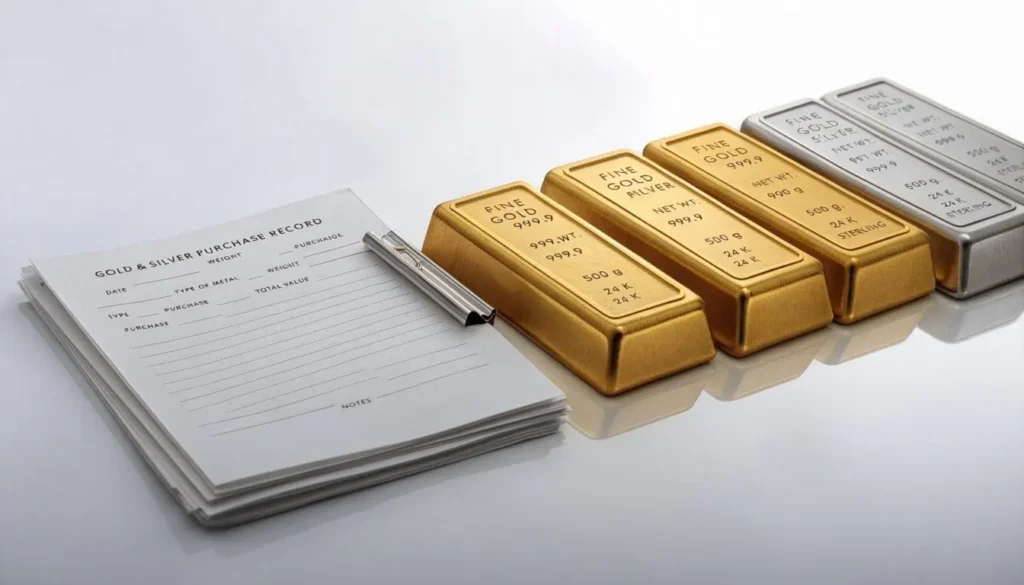
Physical gold and silver have no deed, no account statement, and no name stamped on them, so the only proof of what you own is the paper trail you keep. Recording each purchase while you are alive helps your family find the metal, identify it correctly, and avoid costly mistakes when an estate is settled.
Key takeaways
- Physical gold and silver have no central registry or title, so records and possession are what indicate ownership.
- The most common estate problem is practical, not legal: families never learn the metal exists, or cannot tell what it is.
- Purchase invoices, a simple inventory, and a note about where everything is stored can prevent delays, disputes, and tax surprises.
- At least one trusted person, such as an executor, should know the records exist and where to find them.
Gold and silver have no title, so records do the work
A house has a deed. A bank account has your name on it. A gold coin has neither. An Arizona estate planning attorney describes physical precious metals as among the most vulnerable assets in an estate plan for this reason: whoever holds the metal effectively controls it, and ownership is shown by possession and documentation.
Other estate lawyers make the same point. Physical gold and silver do not come with account statements or title documents, which makes them easy to overlook and open to theft, loss, or family disagreement.
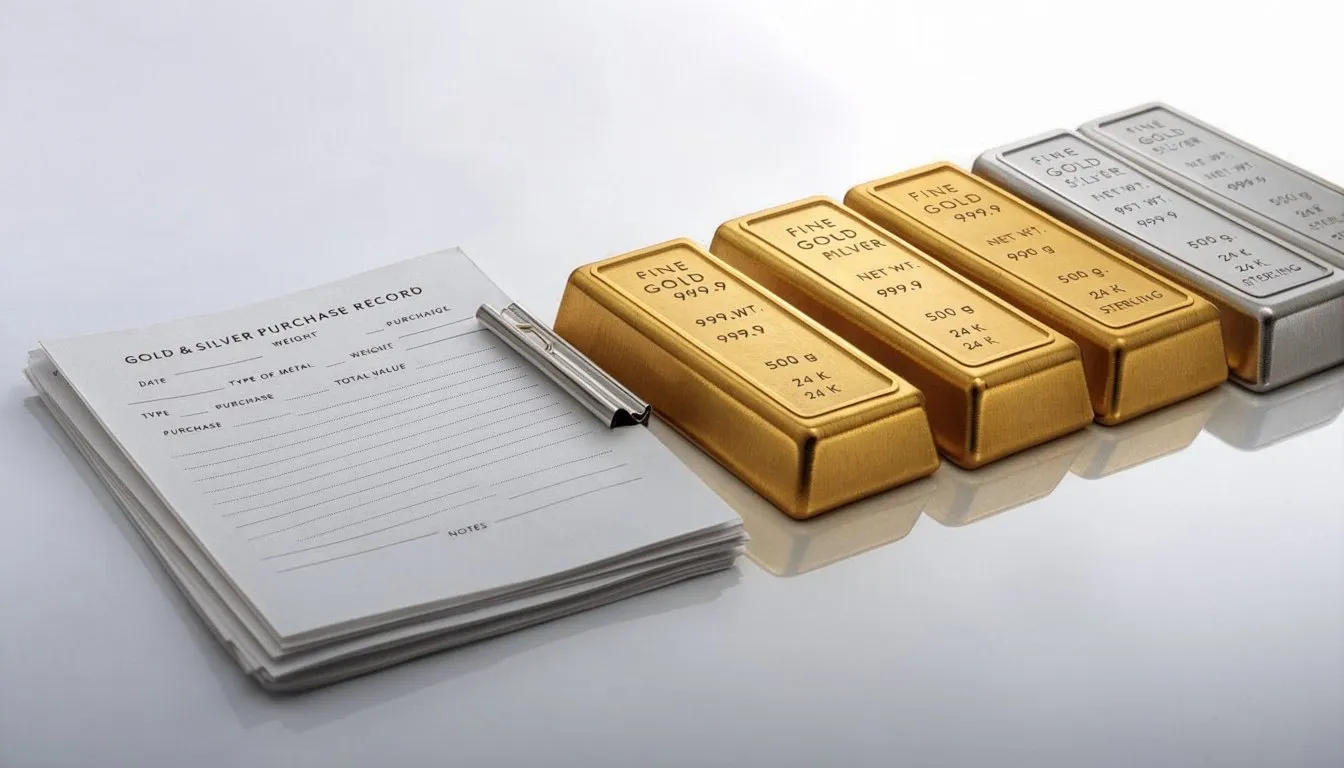
That is the case for acting now. Records created by the owner at the time of purchase are the best evidence anyone will have later. A relative or executor starting from nothing must work out what each item is, what it cost, and where it came from.
What goes wrong when nobody knows what you own
Many owners keep their holdings private on purpose, which is a sound security habit. But complete secrecy has a cost. Metal can sit in a forgotten home safe, a safe deposit box nobody has the key to, or a storage unit whose rent goes unpaid. One estate lawyer describes a client whose silver bars were in a storage unit that was sold off after his death because no one knew they were there. Families often find such assets by accident years later, or never.
Even found metal can be misread. A one-ounce gold coin may look like a souvenir to someone with no experience. A silver bar may be left in a box of household items. A collection of sovereigns may be mixed with jewelry, medals, and commemorative coins, and each of those is valued differently. The risks are delay, disagreement, insufficient insurance, or a rushed sale.
Two more problems arise from the probate process, the court-supervised procedure for settling a deceased person’s estate. A will alone does not avoid it. In Arizona, according to one attorney, probate is public, so an inventory of your assets and their values becomes a court record anyone can look up. He also says even a straightforward case typically takes six months to a year or more, and the family cannot reach the assets until it closes.
The executor, the person named to carry out the will, usually has to compile that inventory. One personal finance source says this often means searching the deceased person’s desk, filing cabinets, safe deposit boxes, and home, and sometimes interviewing relatives and friends. A simple estate may finish the inventory in a few months. A complex one can take years. A clear record of your metals shortens that search.
What to record for each purchase
A useful inventory does not need to be complicated. A secure spreadsheet, written list, or private digital file is enough. For each item, the sources suggest noting:
- The product name, such as a Gold Britannia, Gold Sovereign, Krugerrand, or silver bar
- Weight and purity, where relevant
- The dealer or supplier, the purchase date, and the price, if known
- The storage location
- The serial number, if a bar has one
- Notes on condition, presentation box, or possible collector value
One sample entry reads like a short sentence: the year, product, purity, quantity, dealer, where it is stored, that the invoice is kept, and a reminder to get a current dealer buy-back quote before any sale. A buy-back quote is the price a dealer will pay to buy the item from you.
For larger or mixed holdings, a two-level structure works well. Level one lists containers or groups, such as “Box 3, 90% silver quarters.” Level two describes important individual items and gives counts or weights for standard bulk groups. Give each item a neutral code, put the code on an outer label or container rather than on the coin or bar, and link it to a spreadsheet row and photographs.
Photograph the front, back, marks, holder label, and packaging of important items. Do not break the seal on packaging for a better picture, and do not remove certified coins from their grading holders. Keep any certificates and assay cards (documents confirming a bar’s metal content) with the corresponding item.
Keep different kinds of values in separate columns. Purchase cost, metal value on a given date, estimated resale range, insurance replacement value, and formal appraisal value answer different questions. One value column becomes misleading as markets move.
Mark anything unusual. Bullion is generally valued by weight, purity, the live metal price, and dealer buy-back terms. A rare or collectible coin, known as a numismatic coin, can carry an additional collector premium. Jewelry can be worth more than its metal because of design, brand, or gemstones. A note such as “seek specialist valuation before sale” can keep a relative from selling a valuable piece as scrap.
Why the purchase paper trail also matters for taxes
Taxes are another reason to keep invoices. Cost basis is, in general, what you paid to acquire property. When you sell gold or silver at a profit, you owe tax on the gain, which is the sale proceeds minus your basis. One tax-focused source warns that without documentation, the IRS can treat your basis as zero and tax the entire proceeds as gain.
That source says the basis includes the price on your invoice, the dealer’s markup over the metal price, and any shipping, transit insurance, and sales tax paid at purchase. Annual vault fees and insurance premiums generally do not add to basis.
If you buy in several lots at different prices, each lot has its own basis, and the IRS default for unidentified sales is first-in, first-out, meaning the oldest units are treated as sold first. Tracking this from your first purchase is far easier than rebuilding it years later.
Inheritance changes the math somewhat. According to one personal finance source, inherited gold usually receives a step-up in basis, meaning the basis resets to fair market value on the date of death, so heirs generally owe tax only on gains after that date.
A gift, by contrast, typically carries over the giver’s lower basis. The same source advises obtaining a professional appraisal right away because, without proper valuation, the IRS may challenge the figures. It also notes that the IRS treats physical gold as a collectible, with long-term gains taxed at up to 28%.
So an heir’s key document may be a date-of-death appraisal, while an owner who sells or gives away metal during their lifetime needs the original invoices. Both depend on keeping good records. A tax professional can say how these rules apply in a particular case.
Who should know, and where to keep it all
Store the inventory with your other estate planning documents, and tell your executor or successor trustee that it exists. A successor trustee is the person who takes over a trust after its creator dies. One law firm suggests keeping copies in multiple secure locations. Another source adds that a digital copy is sensible, but should not be a file that only you can open.
You need not share every detail widely. Sources suggest a spouse, executor, or trusted relative should know:
- That you own gold or silver
- Where the inventory and invoices are kept
- Whether anything is held in professional storage
- Which dealer you prefer
- Whether any items need specialist advice before sale
Keep the records private otherwise. Avoid publicly displaying detailed lists, photos, quantities, or storage locations, and avoid putting your address or exact storage spot in photo filenames or image data.
Discuss the metals with the attorney who drafts your will, especially if you want certain items to go to a specific person. Some attorneys recommend a personal property memorandum, a separate list of specific items and who receives each, which you can update without rewriting your whole plan. For larger holdings, one firm notes that a revocable living trust lets the successor trustee take possession without waiting for probate court approval. Ask beneficiaries, too, whether they want the metal itself or would prefer it sold, since storing and insuring it is a real responsibility.
An inventory also helps with insurance. Standard homeowners’ policies typically limit coverage for precious metals, so confirm coverage, valuation, and appraisal requirements directly with your insurer.