Why Convert Dealer Quotes to Price Per Troy Ounce?
Some links may be affiliate links. If you buy through them, we may earn a commission at no extra cost to you.
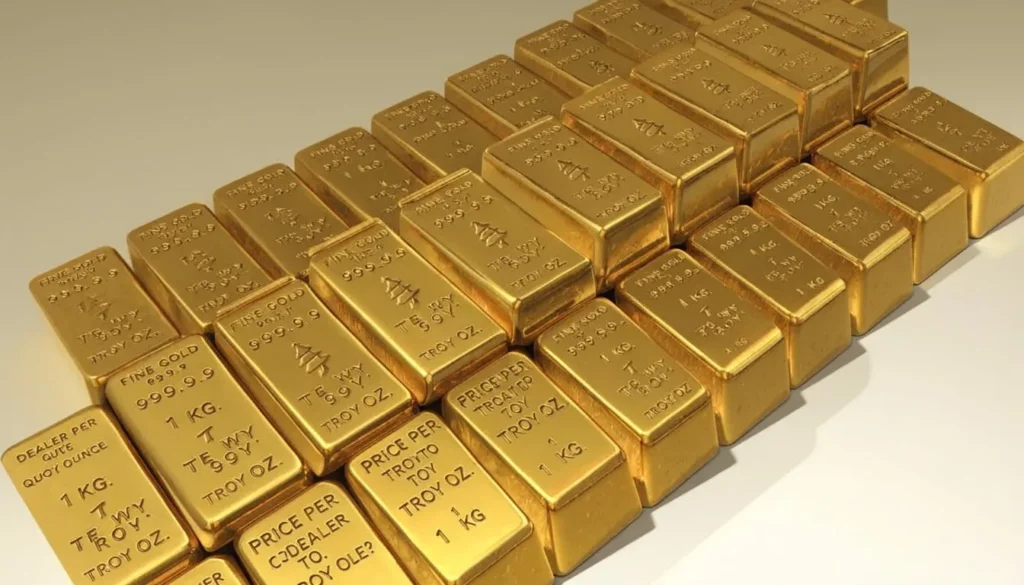
Precious metals dealers quote prices in troy ounces, grams, karats, and flat per-piece totals, so two offers that look similar can cost different amounts. Converting every quote to a price per troy ounce of actual metal puts the offers on a common scale, so you can judge premiums, fees, and buyback terms fairly.
Key takeaways
- The troy ounce, not the everyday ounce, is the standard unit for gold, silver, platinum, and palladium, and it weighs about 10% more.
- One troy ounce equals 31.1034768 grams, the conversion factor that links gram quotes to spot prices.
- Divide the full delivered cost by the fine metal weight, not the headline price by the piece count.
- Run the same conversion on a dealer’s buyback quote to see the true round-trip cost.
A troy ounce is not the ounce on your kitchen scale
The precious metals industry measures metal in troy ounces, and it often uses “ounce” or “oz” to mean a troy ounce. The formal abbreviation is “ozt.” The unit is named for Troyes, a French trading city that hosted large medieval fairs where merchants traded gold and silver. The Troy system later reached Britain and stayed in use for precious metals even after other old weights were abolished.
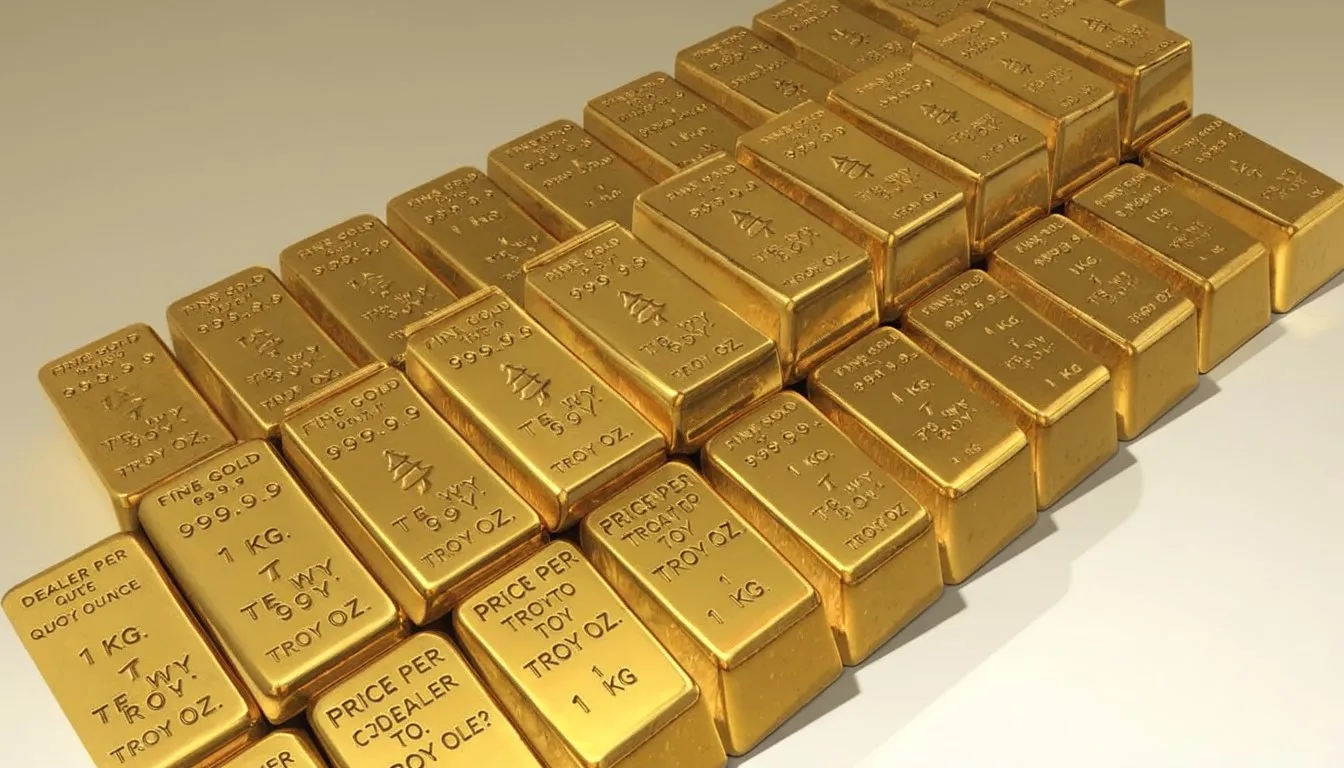
The everyday ounce, called the avoirdupois ounce, is a different weight. A troy ounce is 480 grains, while an avoirdupois ounce is 437.5 grains. In metric terms, a troy ounce is 31.1034768 grams and an avoirdupois ounce is 28.349523125 grams. One troy ounce equals about 1.097 ordinary ounces.
The pound differs too: a troy pound has 12 ounces, while the everyday pound has 16. Treating the two ounces as interchangeable would shift the price by roughly 10%. That is larger than the typical dealer premium on a gold bar.
Dealers quote in different units, and the units hide the difference
Spot price, the wholesale benchmark for pure metal, is stated per troy ounce. Jewelers, refiners, and scrap buyers often price by the gram instead. The link between the two is fixed. Divide spot per troy ounce by 31.1035 to get spot per gram, or multiply a per-gram price by 31.1035 to get back to the troy ounce.
Purity adds another layer. The value of an item’s gold is the price of pure gold per gram multiplied by its purity. A 24k item is about .999 fine, 22k is about 91.67% gold, 18k is 75%, and 14k is 58.33%. A gram of 14k gold is not lower-quality gold. It is less gold mixed with more alloy.
So a coin’s total weight may not equal its gold content. The Krugerrand and the American Gold Eagle, both 22k, each contain a full troy ounce of gold plus an alloy of copper and silver. A buyer comparing such a coin with a .9999 fine one-ounce bar should compare the price per troy ounce of fine metal. The way to do that is to divide the total price by the fine weight. For jewelry, fine weight is the item’s weight in grams multiplied by its purity, divided by 31.1035.
Convert the whole transaction, not just the sticker price
A low unit price can hide higher costs elsewhere. The cost of a bullion product is its spot-based metal value plus a premium. That premium covers refining, minting, distribution, insurance, and retailing. If spot gold is G and a one-ounce coin costs 1.05 times G, the premium is 5%.
Normal-market ranges cited for 2026 run roughly from 1% to 5% for gold bars and from 3% to 8% for sovereign gold coins. Silver premiums are higher in percentage terms because minting and shipping costs are fixed per item. A price per troy ounce lets you set each offer against spot and see the premium directly.
Shipping, handling, payment method charges, and tax are included in the total as well. The U.S. Federal Trade Commission’s comparison-shopping guidance stresses comparing total costs. One worked example uses fictional numbers:
- Seller A charges $36 per one-ounce silver round plus $10 delivery for twenty rounds. The total is $730, or $36.50 per troy ounce.
- Seller B charges $35.50 per round plus $25 delivery. The total is $735, or $36.75 per troy ounce.
Seller B has the lower sticker price, but Seller A is cheaper per ounce delivered. Dividing the final checkout total by the total troy ounces makes that visible.
Apply the same math to the buyback quote
The cost of owning physical metal also includes what a dealer would pay you for it. The gap between a dealer’s selling price (the ask) and buying price (the bid) is the spread. The U.S. Commodity Futures Trading Commission recommends asking about buyback prices and written fees.
Express both prices per troy ounce of fine metal, and the round-trip cost becomes plain. An illustrative example uses a one-ounce gold coin bought at 6% over a $5,000 spot price, or $5,300. It is later sold at 1% below the spot price, or $4,950. The round-trip cost is $350 per ounce, or 7% of the spot price. A dealer who bought back at spot would reduce that to $300 per ounce.
Several details change what a buyback quote is really worth:
- Timing: Record the date and time of each quote. A fresh retail price set against an old buyback screenshot is not a fair comparison.
- Product: Confirm the quote applies to your actual items, not a generic category.
- Costs: Subtract selling-side costs, such as insured shipping, which can range from $30 to $100 or more, without counting any fee twice.
- Terms: Ask about minimum quantities, price locking, inspection, and payout timing.
Spreads also vary by product. Government-minted coins such as the Gold Eagle and Silver Maple tend to have the tightest spreads. Spreads can still widen in shortages. American Silver Eagle premiums passed 50% over spot at many dealers in March 2020 and early 2021.
Scrap is a different case. Scrap buyers typically pay a percentage of melt value, often 85% to 95% for gold, so the buyer’s share of the metal’s value is smaller than with recognized bullion.
A simple routine for comparing offers
- Write down each offer’s metal, product, quantity, fine weight, and timestamp.
- Convert any gram or karat figures to fine troy ounces using 31.1034768 grams per troy ounce and the purity.
- Add all delivery, handling, payment, and tax charges to get the total amount due.
- Divide the delivered total by fine troy ounces. This is the cost per ounce.
- Compare that figure with the spot to see the effective premium.
- Repeat with each buyback quote, net of selling costs, to see the round-trip gap.
A per-ounce figure makes offers comparable, but it does not predict future prices. Premiums, dealer demand, and buyback terms can each change on their own, so refresh the quotes before relying on a comparison.
Sources
- The Bid-Ask Spread in Precious Metals: Investor Guide – herobullion.com